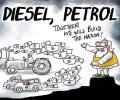
The government on Friday slapped an export tax on petrol, diesel and jet fuel (ATF) while also joining nations like the UK in imposing a windfall tax on crude oil produced locally. A Rs 6 per litre tax on export of petrol and ATF and Rs 13 per litre tax on export of diesel is effective from July 1, finance ministry notifications showed. Additionally, a Rs 23,250 per tonne tax was levied on crude oil produced domestically.

Housing sales jumped over 4.5 times year-on-year in April-June across eight cities to 74,330 units on lower base effect, while demand was up 5 per cent from the previous quarter, according to PropTiger data. Housing sales stood at 15,968 units in the April-June period last year and 70,623 units in the January-March quarter of 2022. The price of residential properties rose 5-9 per cent annually, driven by rise in input costs, inflationary pressures and premium attached with ready-to-move-in inventory. Pune and Chennai saw maximum appreciation at 9 per cent each.

The services sector had slipped into contraction in July as confusion caused by the GST rollout triggered a dip in new business orders.
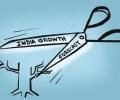
India's projected economic growth for 2022 has been downgraded by over two per cent to 4.6% by the United Nations, a decrease attributed to the ongoing war in Ukraine, with New Delhi expected to face restraints on energy access and prices, reflexes from trade sanctions, food inflation, tightening policies and financial instability, according to a UN report released on Thursday. The UN Conference on Trade and Development (UNCTAD) report downgraded its global economic growth projection for 2022 to 2.6 per cent from 3.6 per cent due to shocks from the Ukraine war and changes in macroeconomic policies that put developing countries particularly at risk. The report said while Russia will experience a deep recession this year, significant slowdowns in growth are expected in parts of Western Europe and Central, South and South-East Asia.

Companies are also worried about inflationary pressures building up.

Services companies continued to raise prices, though the rate of change was the weakest since April

'For the next two years, we expect the bulk of earnings growth contribution from sectors like financials and energy, where the outlook remains positive, while the sectors which are linked to domestic consumption and are currently witnessing strains on margins have low salience for Nifty earnings.'

Service providers' confidence with regard to the 12-month outlook for business activity remained positive.

Prices of all metals - from steel to copper, aluminium, zinc and lead - have shot up by about 5-11 per cent in the past month. Commodity inflation is raising its head, forcing companies to consider price hikes.

Asserting that retail inflation excluding food and fuel is still at an elevated level, the Reserve Bank of India on Tuesday said it would endeavour to curb price increases.

RBI watchers are going to be on tenterhooks for the next 3 weeks.

Although growth picked up slightly across the world's main emerging markets on an average, rates of expansion remain subdued

The hardening of the Wholesale Price Index follows an uptick in retail inflation.

A reading above 50 represents expansion while one below means contraction.
HSBC PMI falls to 50.7, slow domestic demand offsets pick up from abroad.
'Thankfully, most investors in India have now seen through this false narrative and are once again deploying their hard-earned money.

That means a manufacturer looking at a market like India needs to decide whether small, cheap cars or small, expensive cars or both will work better for them, says Pavan Lall.

Domestic air passenger traffic touched 1.25 crore in January this year, an increase of 96 per cent compared to the year-ago period, according to rating agency Icra. However, it said the traffic remained around 2 per cent lower compared to the pre-Covid levels -- January 2020. The traffic stood at 64 lakh in January last year. Icra is maintaining a negative outlook on the Indian aviation industry, reflecting the view that the financial performance of Indian airlines is likely to remain under pressure in the near term, even though the recovery in domestic passenger traffic has been healthy.

The Nikkei Markit India Manufacturing Purchasing Managers' Index (PMI) -- an indicator of manufacturing activity -- declined from 52.5 in April to a three-month low of 51.6 in May.

Index of Industrial Production is expected to have grown by 1-2 per cent in April, D&B said in a research note, adding that the pace of improvement in consumption and investment demand is likely to take place as per the measures taken by the new government.

Oil content in mayonnaise slashed by 40 per cent, milk used in ice-creams 96 per cent fat-free, all wraps made of whole grain.
.jpg)
The subdued labour market is likely to recover.

Falling valuations, slowing funding rounds and faltering investor sentiment seem to have prompted many start-ups to lay off employees in a bid to conserve cash. The latest to do so is SoftBank-backed Cars24, a leading e-commerce platform for pre-owned vehicles, which has laid off over 600 staff, according to sources in the know. The move, they said, is aimed at conserving cash amid cautious investor sentiment and a slowdown in funding.
The Reserve Bank of India on Thursday decided to keep policy rate unchanged for third time in a row as it maintains heightened vigil on inflation. The rate increase cycle was paused in April after six consecutive rate hikes aggregating to 250 basis points since May 2022.

'We actually have a problem because there may be too much activity in India.' 'Markets don't like too much concentration. But we are very happy with our collaborations in India.'
The RBI's macroeconomic report released after the close of markets said upside risks to food inflation remain and that it expects the retail and wholesale price inflation to remain above comfort levels.

With the first quarter gross tax mop-up reaching Rs 5.6 lakh crore, Icra Ratings on Friday said the government is set to exceed the budgeted tax collection target of Rs 22.2 lakh crore for 2021-22, led by indirect taxes. The government has budgeted a modest 9.5 per cent growth in tax collections at Rs 22.2 lakh crore for FY22, over FY21 collections of Rs 20.2 lakh crore. However, despite the second wave of the pandemic, the April-June quarter tax collections rose to Rs 5.6 lakh crore, which is 39 per cent higher than Q1 of FY20.

'If you look at the order books of capital equipment companies or money deployed on the ground, there is forward movement in terms of actual investment by the private sector.'

India Inc on said the Seventh Pay Commission set up today for central government employees is likely to lead to additional burden on the exchequer and increase inflation by pushing demand.

Thus far in FY21, BSE, NSE have rallied 70 per cent and 71 per cent, respectively.

The middle income group has been impacted by inflation particularly in context of falling The rupee and its cascading effects on price rise of items like petroleum products and edible oil, according to a survey by apex chamber Assocham.

Foreign Direct Investment flows to India in 2021 were 26 per cent lower, mainly because large M&A deals recorded in 2020 were not repeated, the UN trade body has said.

High networth individuals selling stocks to buy real estate is among the key risks for the Indian markets.

The Nikkei India Manufacturing Purchasing Managers' Index (PMI) stood at 47.9 in July, down from 50.9 in June, its lowest mark since February 2009, and highlighted the first deterioration in business conditions in 2017 so far.

Carmakers Mercedes-Benz, Audi, Renault, Kia India and MG Motor on Wednesday announced plans to hike vehicle prices from January to partially offset the impact of rising input costs. They join the likes of market leader Maruti Suzuki India and Tata Motors, which have also made the year-end announcements to raise prices from next month. Audi India said it will increase prices of its entire model range by up to 1.7 per cent, while Mercedes-Benz India noted it will hike the prices by up to 5 per cent from January 1.

From the pandemic shocks to state polls to global trends, a raft of sentiment drivers are expected to steer the Indian stock market in 2022 after a historic year of massive investor returns and milestones. The Union Budget, which will be closely watched for further reform moves, and quarterly earnings of corporates will be among the developments on investors' radar amid global central banks moving towards tighter interest regime in the wake of inflationary pressures. The year 2021 was rewarding in a big way for equity investors.

Indian economy is expected to improve marginally in the current financial year with its GDP at market price projected to expand by 3.4 per cent from 3.3 per cent in the previous fiscal, think tank OECD said.

It said the money supply recovered to its pre-demonetisation level in mid-2017 and is now increasing steadily, similar to the previous trend.

The HSBC/Markit purchasing managers index for the manufacturing industry stood at 50.1 in July, slightly more than 50.3 in June, indicating a broad stagnation of manufacturing operating conditions in India.

The HSBC Markit Services Purchasing Managers' Index fell to 51.7 in June from May's three-month high of 53.6, in a sign that Asia's third-largest economy is still struggling to climb out of a quagmire of low growth and high inflation.
